Superintelligence (SI)
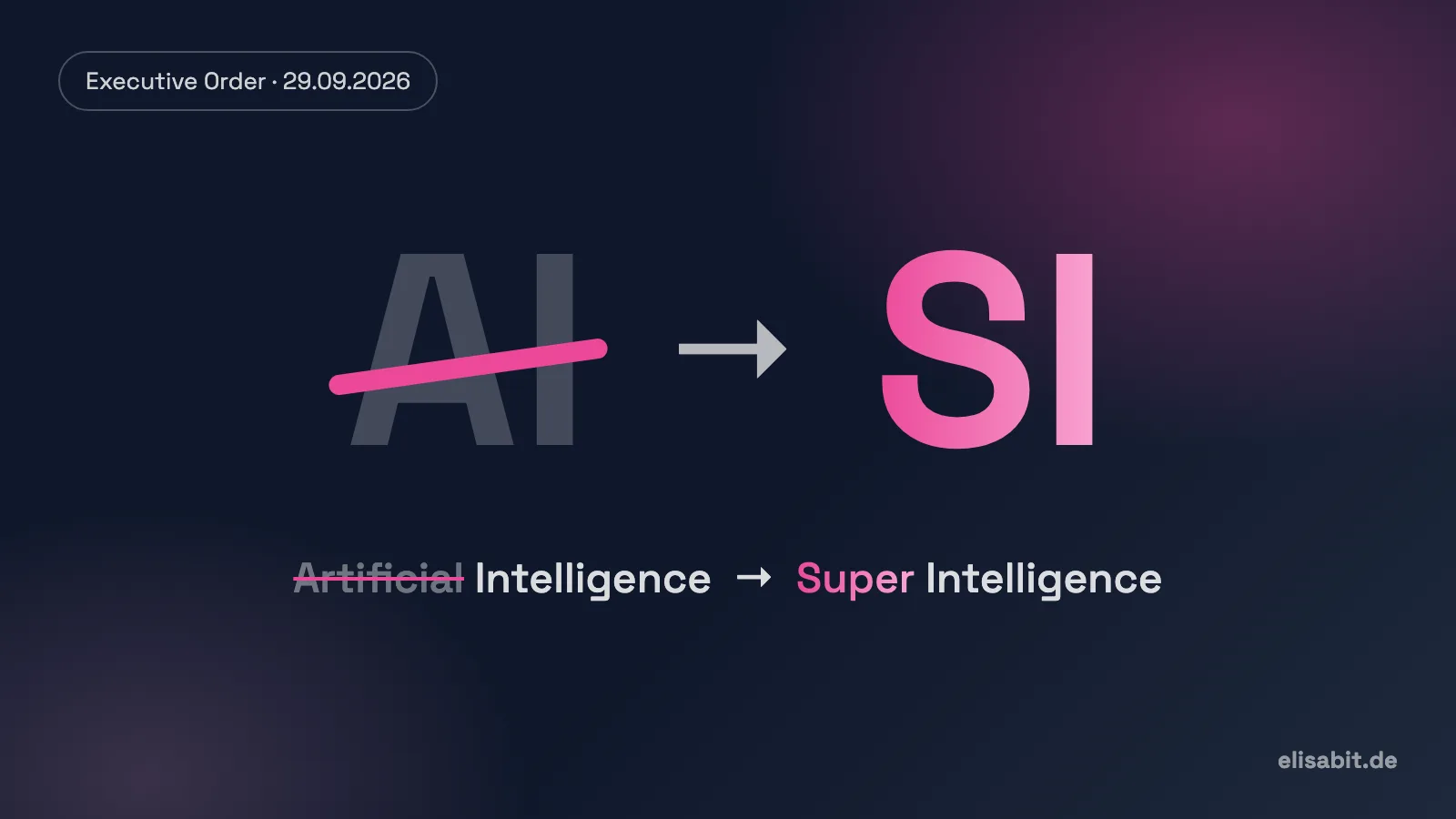
Superintelligence, or SI for short, has been the official name the US government uses since the end of September 2026 for what used to be called Artificial Intelligence (AI). US President Donald Trump announced the renaming on 22 September 2026 before the UN General Assembly and made it binding by executive order on 29 September 2026: since then, federal agencies speak of “Super Intelligence” and “SI”, no longer of “AI”. The reasoning: the word “artificial” sounds like imitation, while today's systems can do far more. The term refers to the technology available today, meaning large language models, AI agents and generative systems. It must be distinguished from superintelligence in the scientific sense (ASI), a hypothetical system that surpasses humans in almost every field.
Also known as: SI, Super Intelligence, superintelligence, Superintelligence instead of AI
What happened? The renaming from AI to SI
The renaming came in two steps. On 22 September 2026, Donald Trump spoke before the General Assembly of the United Nations in New York. There he announced that all United States documents should speak of “Super Intelligence” instead of “Artificial Intelligence” in the future. The word “artificial”, he said, makes the technology seem fake. In the same speech he rejected calls for global control of the technology, which more than 20 mostly European countries had made shortly before.
One week later, on 29 September 2026, the executive order titled “Inaugurating The Era Of Super Intelligence” followed. It was signed after a summit with the heads of major technology companies at the White House. Since then, the rule for the US federal administration is: AI becomes SI.
The reaction was quick. The US Chief Technology Officer adopted the new wording immediately, and Elon Musk now also says “SI” at press conferences. In Europe and Germany, however, official usage does not change: the EU regulation is still called the AI Act, and German law still speaks of Künstliche Intelligenz.
| Date | Event |
|---|---|
| 22.09.2026 | Trump announces before the UN General Assembly that AI will be called “Super Intelligence” in all US documents. |
| 29.09.2026 | The executive order “Inaugurating The Era Of Super Intelligence” is signed. |
| 29.09.2026 | Leading US labs sign the voluntary “White House Accord on Super Intelligence”. |
| by end of Nov. 2026 | The President's science adviser is to propose a federal definition of SI (within 60 days, according to Forbes). |
What exactly does the executive order say?
The order is above all a language rule for the US federal administration. It does not apply to companies, citizens or other countries. According to Forbes, existing laws, regulations and contracts do not have to be rewritten.
- All departments and federal agencies use “Super Intelligence” and “SI” in official correspondence, public communications, on websites, in reports and in policy papers.
- The terms “Artificial Intelligence” and “AI” are no longer used in these documents.
- The Assistant to the President for Science and Technology is to propose a federal definition of “Super Intelligence”.
- He is also to examine which further steps are needed, for example whether the statutory definition of “artificial intelligence” should be replaced.
- Regulations, contracts and documents already issued remain valid without changes.
Why is AI now called SI? The reasoning
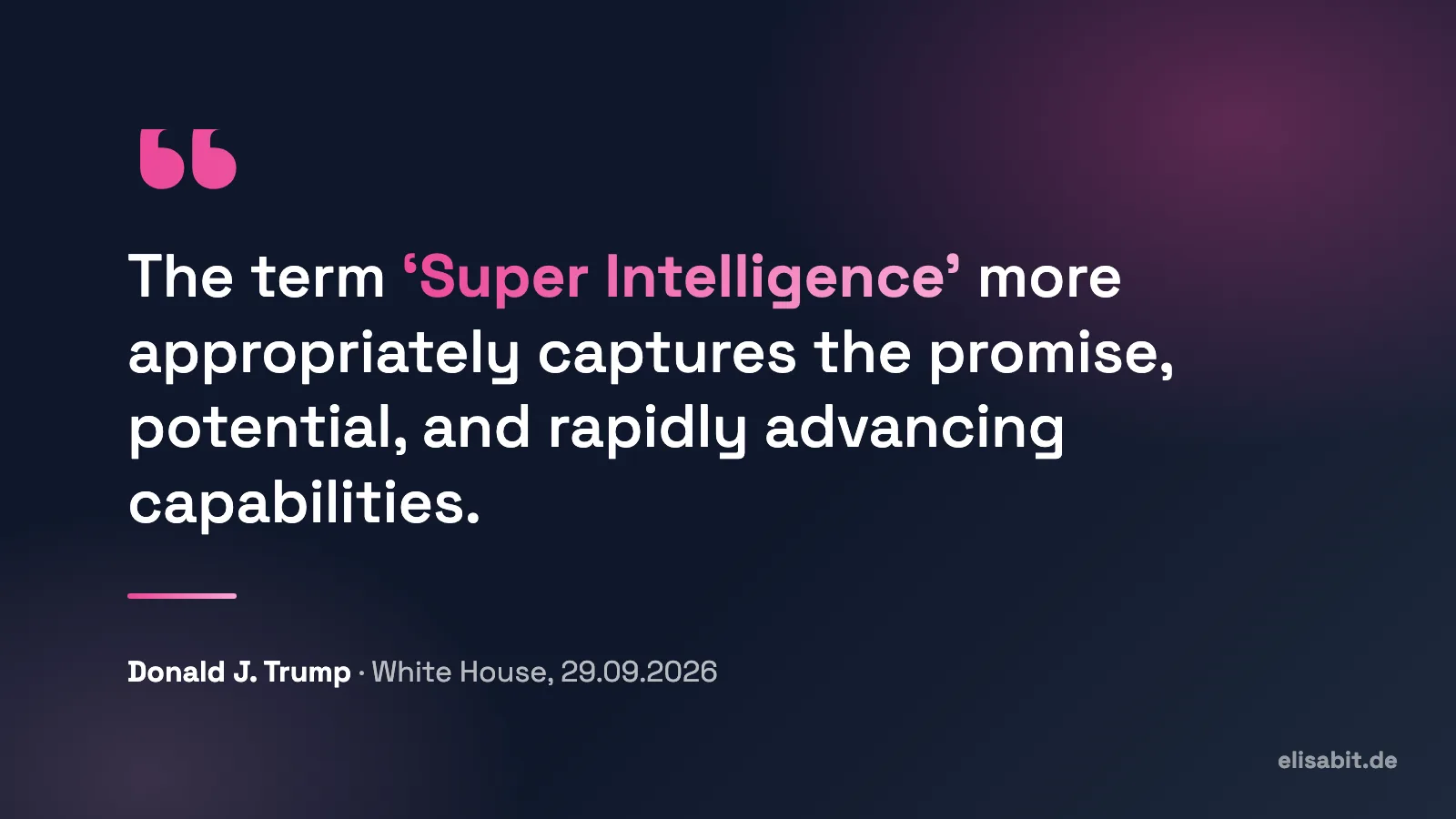
The White House justifies the new name by saying it better describes the actual capabilities of today's technology. The systems, it says, do not merely imitate or automate human intelligence, as the term “artificial intelligence” suggests. The name stands for the continuously advancing technological frontier and the limitless promise for the American people. Trump himself said that “Super Intelligence” more appropriately captures the promise, potential and rapidly advancing capabilities.
There is also a political line behind the choice of words. The US government relies on speed and leadership instead of strict regulation. The word “Super” emphasises strength and opportunity, while “artificial” tends to raise scepticism. Observers such as CNBC also place the move in the campaign before the midterm elections, because polls show growing concern among Americans about the technology.
Criticism: What speaks against the new name?
The new term is controversial. Darrell West of the Brookings Institution said the name sounds like “Terminator”, more threatening than reassuring. Experts therefore doubt that the renaming will increase public acceptance.
The most important technical objection: in research, “superintelligence” has had a fixed meaning for years. It refers to a hypothetical intelligence that clearly surpasses humans in almost every field, made famous by Nick Bostrom’s book “Superintelligence” and called ASI in technical language. Calling today’s language models SI therefore mixes a tool that is really available with a concept of the future. This distinction matters for discussions about risks, regulation and safety.
Then there is clarity: internationally, AI remains the established term, in Germany KI. Companies should therefore know that both names mean the same thing when American partners, vendors or authorities speak of SI in the future.
| Term | Meaning | Who uses it? |
|---|---|---|
| AI (Artificial Intelligence) | Previous international term for learning, generative and agentic systems | Worldwide, EU AI Act, research |
| KI (Künstliche Intelligenz) | German term for the same technology | Germany, Austria, Switzerland, German law |
| SI (Super Intelligence) | New official US name for the same technology of today | US federal agencies since 29.09.2026, parts of the US tech industry |
| ASI (Artificial Superintelligence) | Hypothetical intelligence that surpasses humans in almost every field | Research, AI security, philosophy |
What is the White House Accord on Super Intelligence?
At the end of the White House summit, the heads of the major US labs signed a separate document, the “White House Accord on Super Intelligence”. It is not a law but a voluntary commitment by the industry. According to Mike Johnson, Speaker of the House of Representatives, it contains common standards for internal controls as well as for internal and external reviews of the systems.
Trump called the agreement “morally binding” for the signatories. Meta CEO Mark Zuckerberg described the summit as a positive step and stressed that the leaders of every major American lab had committed to robust internal controls.
What does SI mean for companies in Germany?
Legally, nothing changes for companies in Germany. The EU AI Act still applies unchanged, as does the GDPR. Anyone using AI systems must continue to meet the same obligations, no matter what the technology is called in Washington.
In practice, it pays to know the new term. US vendors, press releases and government documents will increasingly speak of SI. The name will also appear in tenders, contracts with US partners and the trade press. Anyone who knows that SI and AI mean the same thing will read these texts correctly.
agentbit works with Superintelligence
agentbit, the agent platform by Elisabit, relies on exactly the technology that is now called Super Intelligence in the US. In agentbit OS, specialised SI agents work in their own areas: Max organises tasks and projects, Mia takes care of marketing, Google Ads and reporting across all channels, Nina writes emails and handles office work, Elias maintains websites and builds new pages.
Under the hood, agentbit uses the most powerful models currently available, including Claude Opus 5.5. The difference to many US offerings: all models run exclusively in data centres in the EU, via providers such as AWS Bedrock, Microsoft Azure and OVHcloud. This way, companies get the power of the latest SI without sending their data to the US.
The agents do not act blindly. Before they do something important, such as sending an email or publishing a page, they show a preview for confirmation. Permissions, access and connections to Google, Microsoft 365, WordPress or Shopify remain separate per company and per user.
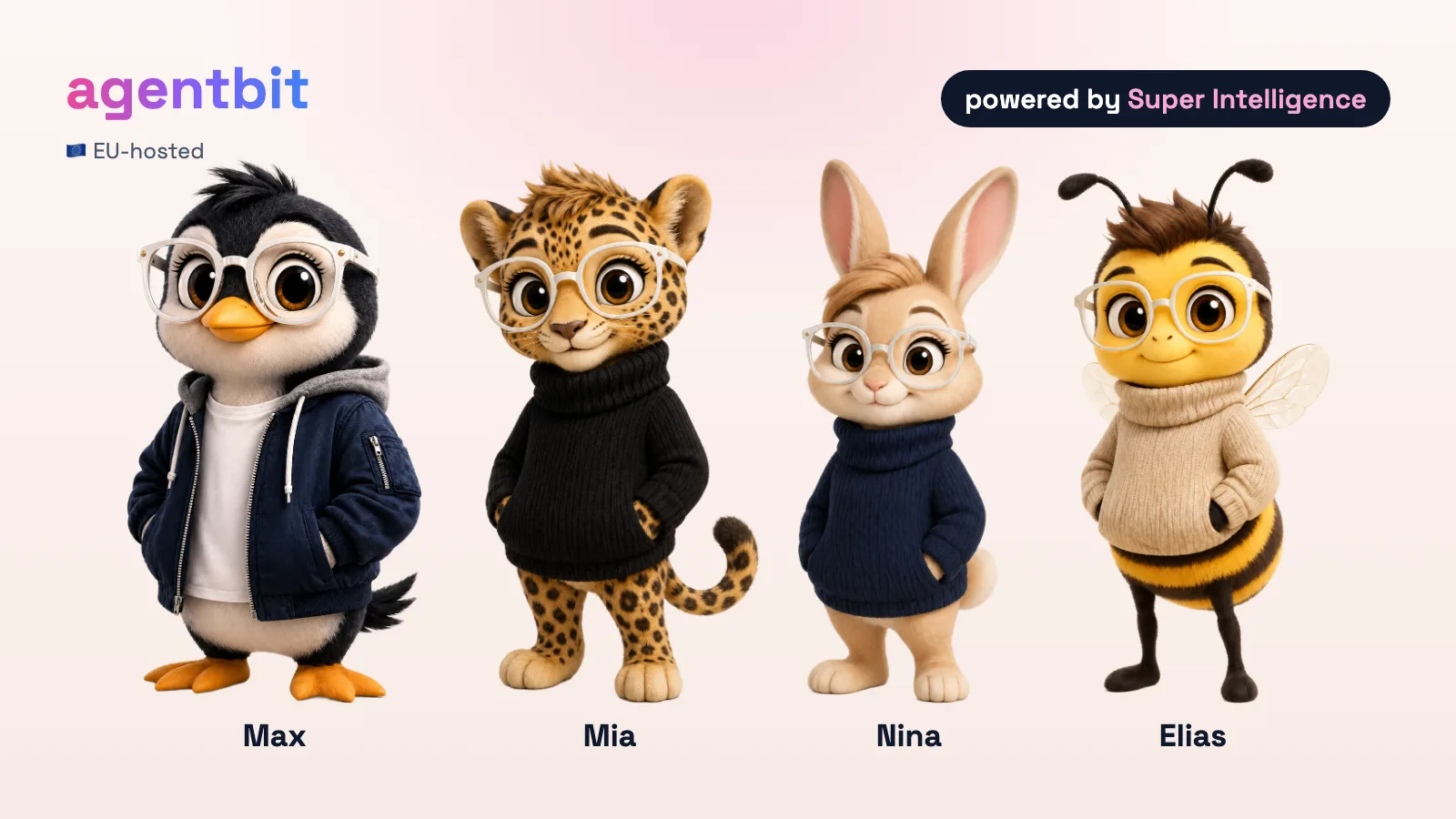
- Specialised SI agents for tasks, marketing, office and website
- Latest top models such as Claude Opus 5.5
- Models hosted exclusively in the EU
- Confirmation before important actions
- Control via chat, WhatsApp or Telegram
Frequently asked questions
What does SI mean?
SI stands for Super Intelligence. Since 29 September 2026, the US government officially uses this term instead of AI (Artificial Intelligence). It refers to the same technology that is called Künstliche Intelligenz in German.
Why is AI now called SI?
Donald Trump considers the word “artificial” misleading because it sounds like fake or imitation. According to the White House, “Super Intelligence” better describes the actual capabilities of today's systems and stands for the promise of the technology.
Since when does the new name apply?
It was announced on 22 September 2026 in Trump's speech before the UN General Assembly. It has been binding since the executive order of 29 September 2026, but only for the US federal administration.
Is AI now also called SI in Germany?
No. The order applies only to US federal agencies. In Germany and the EU, the official terms remain Künstliche Intelligenz and the EU AI Act. In everyday life, however, SI will appear more often, especially in texts by US vendors.
Is SI the same as superintelligence (ASI)?
No. SI is a political name for the technology available today. In research, ASI means a hypothetical intelligence that surpasses humans in almost every field and does not exist yet.
Does agentbit work with Superintelligence?
Yes. agentbit uses the most powerful current models such as Claude Opus 5.5 for its agents Max, Mia, Nina and Elias. All models run exclusively in EU data centres so that company data stays in Europe.
Sources
- 1Fact Sheet: President Donald J. Trump Inaugurates The Era of Super IntelligenceThe White House, 29.09.2026
- 2Trump signs executive order rebranding AI as ‘Super Intelligence’ as tech titans ink separate SI accordFox Business, 29.09.2026
- 3Trump Signs Executive Order Renaming AI To ‘Super Intelligence’: Here’s What It ChangesForbes, 30.09.2026
- 4Trump tries to rename AI ‘super intelligence’ as polls show him sinking on key issueCNBC, 29.09.2026
- 5Trump orders AI rebrand as “super intelligence”Axios, 22.09.2026
- 6Trump seeks to rename artificial intelligence as ‘super intelligence’ in UN speechThe Hill, 22.09.2026
- 7Trump’s ‘Super Intelligence’ Rebrand Could Backfire In A Big Way, Experts WarnHuffPost
Related terms
A hypothetical AI that far surpasses human intelligence in almost every field.
AGI refers to a hypothetical AI that can think and learn across arbitrary tasks in a human-like way.
A framework of policies, roles and controls for responsible and compliant AI.
Protecting AI systems and their data against risks such as prompt injection and data leaks.
AI alignment means bringing the goals and behaviour of AI systems into line with human values and safety.
Put AI to work for your business?
We help you integrate artificial intelligence into your processes, your marketing and your website — strategically and securely.

Your contact
Stefan
I look forward to hearing about your project and finding the best solution together.